Recreation
The Dawson Ranch & Farm provides many opportunities in hunting and fishing. Because of it's size, the farm is a shelter for game species along the Platte riverfront and islands, around the ranch lake, along treelines, and along Duck Creek. During the months of autumn the Platte River is a stopover for migrating waterfowl (e.g. Pintail, Wood, and Mallard Ducks). And there have been some rare sightings of Green-winged and Blue-winged Teals. Canadian Geese were a rare sight only a decade ago, but their numbers seem to grow larger and larger with each passing year. Snow Geese can also be seen migrating, but usually do not stopover on the river because of their preference for larger bodies of water. Riverfront renters use the riverfront, Toehead Island, and the banks along the ranch lake as locations to setup blinds from which to hunt and train hunting dogs.
Pheasant and quail used to be hunted, but a freezing rain storm a few years back wiped out the local population. Hopefully in the future the species will rebound, especially with the help of recent release programs to reintroduce pheasants in the area. For you rabbit lover's, cottontails are plentiful along the treelines and black-tailed jack-rabbits have been sometimes seen. For larger game, we have deer, coyotes, red foxes, raccoons, and bobcats. Trappers can find muskrat and beavers along the Platte River. We've seen markings of beavers around Duck Creek, but no one has trapped there in recent years. Coyotes have been very rare for many years because of mange and the only reported sightings have been in the hills. With the absence of coyotes, sightings of bobcats have increased. And in recent years I occasionally hear stories from hunters and farmers of mountain lion sightings. These signhtings haven't been sustantiated by proof and we'll just have to wait and see if these big cats are truly making a comeback.
In the past 10 years, the white-tailed deer population has exploded, particularly on the ranch and now on the farm. The deer migrate from the shelter of the islands and north side of the Platte River. They'll swim or wade across the Platte River to feed on the planted corn and soybeans at dawn or dusk. In recent years the population has grown large enough that it isn't uncommon to see herds of 20 to 40 deer moving back and forth across the Platte River. Many farmers have stated that they find rows of cornstalks or soybean fields stripped of leaves and grain during the fall harvest. There have been localized bluetongue virus outbreaks, but not enough to stop their population increases. For any hunters that enjoy deer meat ,we'd appreciate any of you who would like to tryout your marksmanship, provided your activities follow state regulations and is coordinated with the renter whose rented the property.
In the early 1980's, Richard B. Dawson Sr. sought the approval from the United States Army Corps of Engineers (USACE) and the Nebraska's Natural Resource Distrist (NRD) for constructing jetties and hard points along the Platte Riverfront. These jetties were created by placing large chunks of cement and concrete, obtained from highway construction sites, which redirects the flow of the river to the center of the Platte River in order to prevent or control soil erosion. A secondary benefit of these areas, or hardpoints, is that they create fast moving currents in front and slow moving currents behind the jetty, where fish gather to feed on washed down nutrients. Channel catfish, flathead catfish, gar, and carp are some of the most common fish that are caught in the Platte River. On occasion anglers can on catch sturgeon, which are protected in the Platte River as is in most US riverways. If you would rather on slower moving bodies of water the ranch lake or Duck Creek are also ideal places to find a fishing hole. Bullheads are the common fish caught in the lake.
Operations
The Dawson Ranch & Farm consists of approximately 2300 acres that can be sub-divided into six operating areas as identified and described in detail below:
The Farm
(Butler County, NE) 684 acres
Located ½ mile northwest of Linwood, NE and functions as the owner's, Richard B. Dawson Sr., base of operations for the entire ranch and farm business. This operation includes irrigated cropland and two adjoining yards with homes, and a 10-acre feedlot. One is a three-story six-bedroom Victorian-style house, or mansion, and the second is a smalller two-style four-bedroom home. Both have there own individual tornado shelters in each yard. Between the two houses and yards is an old horse barn with the original second floor oat-bin now converted to soybean storage area, a large empty hillside corn crib, machine and tool sheds, three garages (one with an adjoining icehouse), a fenced in 6-acre pasture for horses, a modern grain storage bin that has a capacity for just over 60,000 bushels of corn, an emergency power generator enclosed in a protective shed, a pumping system for drinking water, and a chicken house. Skull Creek borders this area to the east. Drainage channels and large dikes have been built up along Skull Creek to protect the farm from flooding, which usually occurs in the Spring or Summer from heavy rains in the surrounding Platte River bluffs. Currently, this area is leased to two brothers, Brian & Lyle Jakub, with Brian renting the mansion. The other house is rented to a third party, which is managed by Ronnie, Brian Jakub's wife.
The Hill Farm
(Saunders County, NE) 280 acres
Located one to two miles southeast of Linwood, NE along the borders of Saunders and Bulter Counties. This opereation includes a two story five-bedroom farmhouse, corn crib, cattle barn, small pasture, water system, and other facilities that are at the edge of one of the Platte River bluffs. This hill farm's cropland is mostly irrigated cropland with two high production irrigation wells. The north irrigation well is used for one center pivot and the south irrigation well is used for gravity irrigation. At the top of the bluff, one has a spectacular view of the western lowlands of the Platte River Valley. On a clear day one can see Schuyler, NE, 12 miles away to the northwest, and North Bend, 10 miles away to the northeast. The hill farm is right adjacent to Camp Moses Merrill Recreation area, a Baptist religious summer camp. Currently the hill famr is leased to Brian Goff, who farms with his father and sister (together the 3co-own the Linwood Land Company). The hill farm conveniently adjoins Brian Goff's own farm to the west.
The Ranch
(Butler County, NE) 1034 acres
Located three miles northwest of Linwood, NE along a 2 mile strip just inland from the southern banks of the Platte River. This operation includes three modern grain storage bins (each having a capacity of just over 30,000 bushels of corn), an empty horse barn, several vacant pig sheds, cow/calf fenced in grazing pasture, a small lake ("Dawson Lake"), and a few tree covered acres along lowland areas. The ranch was originally used for cattle ranching and prairie hay production, but was turned into non-irrigated cropland in late 1970's. Current additions include 6 new center pivots making this ground mostly irrigated cropland. Currently it's leased to the Linwood Land Company. Riverfront and lake recreation lessees (Cory Petersen, Dean Macholan, Gene Macholan, and Wayne Sabatka) utilize the lake, the empty horsebarn, vacant pigsheds, adjoining riverfront, and also help to improve the agriculture operations when possible.
The Riverfront and Toe Head Island
(Colfax & Butler Counties, NE) 100 acres
Located 4 miles northwest of Linwood, NE along a 2 mile strip of land on the southern banks of the Platte River. This property includes two miles of Platte River Frontage and the "Toe Head Island". The riverfront is unfarmed land so many wildgrasses, shrubs or small trees grow in this area. A five acre forested patch, primarily composed of cottonwood trees, is found approximately a half mile west of the eastern border of the riverfront. The riverfront is mainly used for hunting (primarily ducks and white-tailed deer), fishing, and recreational boating (air-boats being the preferred watercraft). Duck blinds dot both sides of the riverbank and islands, particularly during the Fall. There are many United States Army Corps of Engineers (USACE) and Natural Resource District (NRD) sponsored concrete jetties, or hard-points, found along the riverfront. They extend into the Platte River 50 to 60 feet to help prevent water wash and river bank soil erosion. The jetties have also been found to be useful for hunting and fishing.
The Cattle Feedlot
(Butler County, NE) 10 acres
Located on the northwest corner of Linwood, NE. This facility includes two - 600 head feed-lots, a bunker silo, machine sheds, water system, nightlights, cattle loading/unloading chutes, small grain storage containers, entrance gate, and easy access to the road. It is currently leased to Kenny and Brain Goff.
The Black Walnut Orchards and Duck Creek Area
(Butler County, NE) 40 acres
Located on the southern banks of Duck Creek. It includes 40 acres of unfarmed land next to Duck Creek, 8 of which were converted into a Black Walnut tree orchard in the late 1970's. Some 200 Black Walnut trees which were planted on through a government funded program. These trees appear to be doing well and are located in a small field bordering the south bank of a series of large lagoons and ponds that are created by the Duck Creek waterway and watershed. The entire Duck Creek area is covered with native wildlife and vegetation, which arises from the southern banks of Duck Creek and ends approximately 50 yards away where the Dawson farm cropland begins. There are no plans at this time of leasing this property to any interested parties and it's currently enjoyed for recreation and hunting use by the Jakubs or Dawson families. There are several tree stands in this area the are used for deer hunting.
Personal Notes
The Dawson Ranch & Farm produces corn and soybeans, yet during rare unfavorably times, prairie hay, milo, or other small grains may be grown. Since Richard B. Dawson Sr. took over the ranch and farm in 1965, he has tried to maximize the amount of irrigated acreage. All of the production units are largely irrigated using a combination of gravity and/or center pivot irrigation systems. The farm is the most effectively irrigated with around 95% coverage with a combination of two center pivots and gravity irrigation. On average years the farm produces around 170 to 250 bushels of corn per acre. With the addition of another irrigation well in 2003 and leveling of end rows, the farm has now become even more productive during dry years. The hillside farm is 60% irrigated with a combination of one center pivot and gravity irrigation. Because of the steep angles along the bluffs of the hillside farm, it cannot be gravity irrigated and thus crops burn up along these areas during the hot and dry years. The ranch is around 80% irrigated now that six center pivots have been recently added. This has improved the production on the ranch tremendously since it's soil makeup being mostly sandy soil, which left it predisposed to burning up during dry hot summer months. An unmanageable risk still occurs with the ranch as it is located along the Platte River, which predisposes it to Spring flooding and ice chunk damages in years when ice jams form a few miles to the west on the river. Ice jam flooding threatens the ranch to such dangers as changing the flow of the river, causing the river to rise until it overtops the banks and from this flooding debris is wasted onto cropland and washed up ice can literal carve up the land, and can create major erosion along the riverbanks. To increase production yields on the ranch even further, we have activated an old unused irrigation well on a sand ridge and will be removing the pig sheds, which will result in more irrigated cropland.
Opportunities
On September 1, 2003 a four member of lessee (Corp Peterson, Dean Macholan, Gene Macholan, and Wayne Sabatka) signed a six year lease for the riverfront and lake recreation facilities. The only vacant buildings not utilized are the horsebarn, pig sheds, and corn crib.
Final Words
Currently, we are exploring the feasibility of expanding into the conversion of electricity using wind power, raising buffalo or emu as an alternative to domestic cattle, and entertaining the idea of planting organic foods. Development of this web site was partially recommended as another way for others to read about our resources and management strategies. If other ideas, recommendations, or new opportunities are known, please feel free to contact us about them. Thank you for reading our web site and have a nice day.
History
Rodophus Dawson
Rodophus departed from Fowler, Ohio as a newlyweb having married Adaline Charlotte Hill on May 3, 1855. The family moved to Macomb, Illinois and had four children when living there from 1856 to 1862. The family then moved to Lucs County, Iowa and Smyrna, Iowa from 1863 to 1869. They had two more children during this time period. The last child, a boy, died within 60 days from birth. In 1869, Rodophus Dawson and his family (his wife and five children) permanently settled in the Platte Township, Northeast Township of Bulter County near the present day Linwood, Nebraska. It's located a few miles south of the Platte River along the west banks of Skull Creek, near what was once Waverly Township Company of Plattsmouth. This settlement was originally founded in 1857, but was short-lived because of the Pike's Peak Gold Rush. These original families simply abandoned their homesteads and holdings in order to seek their fortunes out West.
Additional, in 1869, the Union Pacific Railroad became operational along the north side of the Platte River. Shortly thereafter, the town of Linwood started to develop when the Fremont, Elkhorn, and Missouri Valley Railroad built a railroad to Linwood from the east, which was on the south side of the Platte River. In eventually expanded further west from Linwood to Hastings and then go to Seward, Nebraska. To meet demand, a heavily used cattle stockyard, rail-loading facility, and a passenger lounge were built in Linwood. This railroad station also included a telegraph service as a communication source. With its cheap passenger service and freight trains for moving commodities, the Fremont, Elkhorn, and Missouri Valley Railroad made Linwood a small boomtown. Local homesteaders cam to Linwood expecting it to grow as large as the city of Omaha. From 1865 to 1890, Linwood received wave-upon-wave of homesteaders. The town was very alive and vibrant during this time period as it was serving the needs of a growing and thriving community.
Late 1890's Family Portrait
During this same time, it is believed that Rodophus homesteaded land in two areas: (1) a farm near Linwood and (2) the ranch (consisted of two miles of Platte Riverfront property along the south riverbank including a few meadows and a small lake that old timers refer to as the "Dawson Lake"). In addition, Rodophus also homesteaded a small island in the middle of the Platte River, called the "Toe Head Island". The farm was developed to grow grain and the ranch and island were used for cattle and prairie hay. It is not known how successful Rodophus was in business matters, but he is credited in founding the Dawson Ranch & Farm. His four daughters married and, as was the custom, moved away with their husbands. Rodophuss only son Daniel Gaius Dawson was the only sibling to join Rodophus in the family ranch and farm business. Rodophus constructed a large Victorian style farm house from 1875 to 1879, often referred to as the "Dawson Mansion". The limestone and lumber that make up the mansion came from Davenport, Iowa, which is approximately 360 miles away from Linwood, and required over three months to transport to Linwood by horse drawn covered wagons. Rodophus died on July 27, 1917 at the age of 95 years old.
Daniel married Minnie P. Homer in Linwood on April 16, 1882 and had six children. Minnie was of German descent and is credited, by her children, for greatly assisting her husband in managing his business. During his tenure, "Sheep Island" (an island on the Platte River that extends two to three miles to the east), several thousand acres in Wyoming, and an interest in the Brown Palace Hotel of Denver, Colorado were added to the family assets. Daniel purchased farmland, property, or provided cash for each of his children. He also financially assisted his oldest son, Walter, in owning and operating a chain of grain elevators in Iowa and Nebraska. Walter was instrumental in helping the farm business with such endeavors as installing a six-outlet telephone system between the farm homes, building the water system for the homes and cattle, and holding a seat on the Omaha Grain Exchange. One interesting note is that Daniel's children reported that there father annually loaded complete trains with cattle every year. These trains would leave the Linwood stockyard with Daniel and his cattle hands and head to Chicago to sell his cattle in person. He'd to Linwood, again by rail alongside his men, with gold filled bags as payment.
'Daniel Gaius Dawson'
This Golden Age was not without risk as there were many unexpected hardships. In general, this was a period of strong business growth for Linwood and the Dawson family until the late 1920's. Some of the memorable hardships included the 1872 blizzard, 1874 to 1877 grasshopper plagues, and a drought in 1890. During and after the 1920's, the town of Linwood and the Dawson family's good fortune turned for the worst. First, the Fremont, Elkhorn, and Missouri Valley Railroad became part of the Chicago and Northwestern Railroad when the government seized operations in the 1920's. Because the government seizures prevented commercial transportation and delivery of local commodities, like that from Walter's evelators to the grain markets in Chicago, many elevator operators incurred huge financial losses. Daniel stepped in to help Walter by paying his son's debts in full. But, this came at a price since Daniel paid by selling his Wyoming and Colorado property and fully mortgaging the farm business. Added to this major challenge to the Dawson family were other hardships, live the Great Depression after the Wall Street Crash of 1929 and the long drought in the 1930's. It was during this latter difficult time period that Daniel discovered he had cancer (presumably prostate cancer, but never truly known considering medical technology at that time). Compounded to these personal difficulties, Linwood began to shrink in size and prosperity as the Chicago and Northwestern Railroad removed its rail lines between Linwood and Hastings and later between Linwood and Seward in the 1940's. This left Linwood without a railroad. Many businesses either moved to nearby towns with working throughway railroad lines, such as Schuyler, or just went out-of-business altogether. The final blow to Linwood came in 1963 when heavy rains just south of town resulted in a flood that destroyed the whole community. Rather than rebuild, most of the Linwood inhabitants left. Today, the town's population is around 95, a small pittance compared to it's heyday of over 400.
Dawson Grain Company
With Daniel bedridden from cancer, Daniel's youngest child, Harold Homer Dawson, moved to a small nearby house in Linwood with his wife, Doris Dayle Backer, and helped in trying to save the family farm from extinction Harold and Doris met while both were attending the University of Nebraska-Lincoln. Prior to moving back to Linwood, Harold had just become a newly certified public accountant who worked for the Skelly Oil Company in Lincoln, Nebraska. Eventually upon Daniel's death on September 19, 1935, at the age of 77 years old, Harold and his family (his wife and two children) moved into the large farm house (a.k.a. "Dawson Mansion"). As the farm remained an employer in the area and the fact that the railroad, at that time, was still in operation, Harold was able to setup a successful cattle business. Harold operated the cattle business as four separate operations: cattle breeding, yearling calves, feedlot cows, and a milk cow operations. Once the cows had their calves each Spring and the Platte River ice jam floods cleared, the cows with their calves were driven across the Platte River to "Sheep Island" where they remained during the summer. This left the Platte Riverfront and meadows available to produce prairie hay for sale on the open market, instead of being used for pasture. The best customers for hay, at that time period, were Omaha dairies, a race track, and various local feed companies. After the hay was cut and stacked or bailed, the cattle returned in the fall from "Sheep Island" and again used the riverfront and meadows for pasture until winter-feeding. One interesting note was that each ranch hand had his assigned milk cows, which he milked every morning and evening. Half of the cream and milk went to the employee for added income and food. The other half went to Harold for food and to use in feeding calves that had become separated or abandoned by their mothers.
'The Dawson Ranch in the 1920`s'
Harold eventually sold "Sheep Island" when he could no longer find any employees that could swim to tend cattle on the islands. A successful pig business was initiated, at that time, and was implemented on both the ranch and farm. Pigs did well when raised alongside feedlot cattle on the farm and they also did especially well in the pasture with milk cows. In fact, the latter arrangement became the preferred location for the pigs as the lightweight sandy soil of the ranch was best suited for the pigs. Fortunately, no pigs drowned during a Platte River spring flood caused by an ice jam.
Upon Harold's death on June 27, 1965, due to a myocardial infarction, his son Richard Backer Dawson Sr. sought the services of the Austin Company, of Columbus, Nebraska, to manage the business. Richard acquired additional property between the farm and the ranch in 1970 by exchanging a farm he inherited from his mother for the property. From this acquisition, the irrigation wells on all three properties became better integrated together, thus making the entire ranch and farm a nearly completely irrigated small grain operation. As a result of the 1980's "Farm Land Price Bust", Richard used his remaining inherited proceeds to purchase two farms in 1987, one small piece adjoining the farm and the Linwood Cemetery and a separate hillside farm one to two miles east of Linwood in Saunders County. Today, only the cattle feedlot continues, but the cattle breeding, milk cow, pig farrow-to-finish, and hay businesses are gone. The Dawson Ranch & Farm is currently crop share rented by two brothers, Brian and Lyle Jakub (with the help of the father), and a cattleman, Kenneth Goff, along with his son, Brian Goff, and daughter, Rhonda Cerny, in producing small grain (corn and soybeans). We arn't exploring expansion options on the riverfront and lake recreation business, which is currently leased by four perople (Cory Peterson, Dean Macholan, Gene Macholan, and Wayne Sabatka).
Initiate a Confidential Consultation
Kindly submit the inquiry form to initiate collaboration, enabling our analysts to develop a customized strategy that advances your real estate goals.
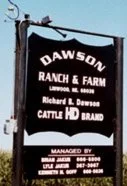
Welcome to the Dawson Ranch & Farm!
Thank you for giving us this opportunity to share information on our family farm. The Dawson Ranch & Farm is located sixty miles northwest of Lincoln and sixty-five miles west of Omaha on the south bank of the Platte River near Linwood, Nebraska. Homesteaded in 1869 by Rodophus Dawson and family, the Dawson Ranch & Farm has been a treasured heritage of the Dawson family. Richard B. Dawson Sr., Rodophus's great-grandson, is the current owner.
Today, the Dawson Ranch & Farm encompasses just over 2300 acres in Butler, Colfax, and Saunders Counties of Nebraska. It produces irrigated and dryland corn, soybeans, feedlot cattle, and a small amount of milo and prairie hay. It also is used for riverfront and lake recreation.
The hillside portion of the farm is on one of the Platte River bluffs, also know as "Indian Hills", which on a clear day provides a great panoramic view of the Platte River Valley as the Pawnee Indians once viewed many years ago. Duck and Skull Creeks run through the valley portion of the farm. Duck Creek is slow moving stream that has flat banks on each side and large wading pools, created from backed up waterways and shelters with undisturded wildlife. In contrast, Skull Creek is a winding deep gourge with a rapid flowing stream and is charactered by it's steep dirt-filled dikes on each bank. It's nearly empty most of the year, except when heavy rains bring rapid-flowing water and debris to flood the surrounding area.
The ranch portion includes two and a half miles of Platte River front, a small island in the Platte River ("Toe Head Island"), and a small lake ("Dawson Lake"). The ranch is ideal for hunting, fishing, and boating. Current riverfront and lake recreation lessees prefer airboats for traversing the shallow, muddy colored Platte River and hunters find it ideal for hunting waterfowl that are found along the river. Good fishing can be found along many of the jetties that have been added along the Platte River Bank to stop erosion in the past two decades. In recent years, the deer population has grown exponentially such that the need for more hunters to shoot their limit has increased.
© Copyright 2026 All Rights Reserved.